
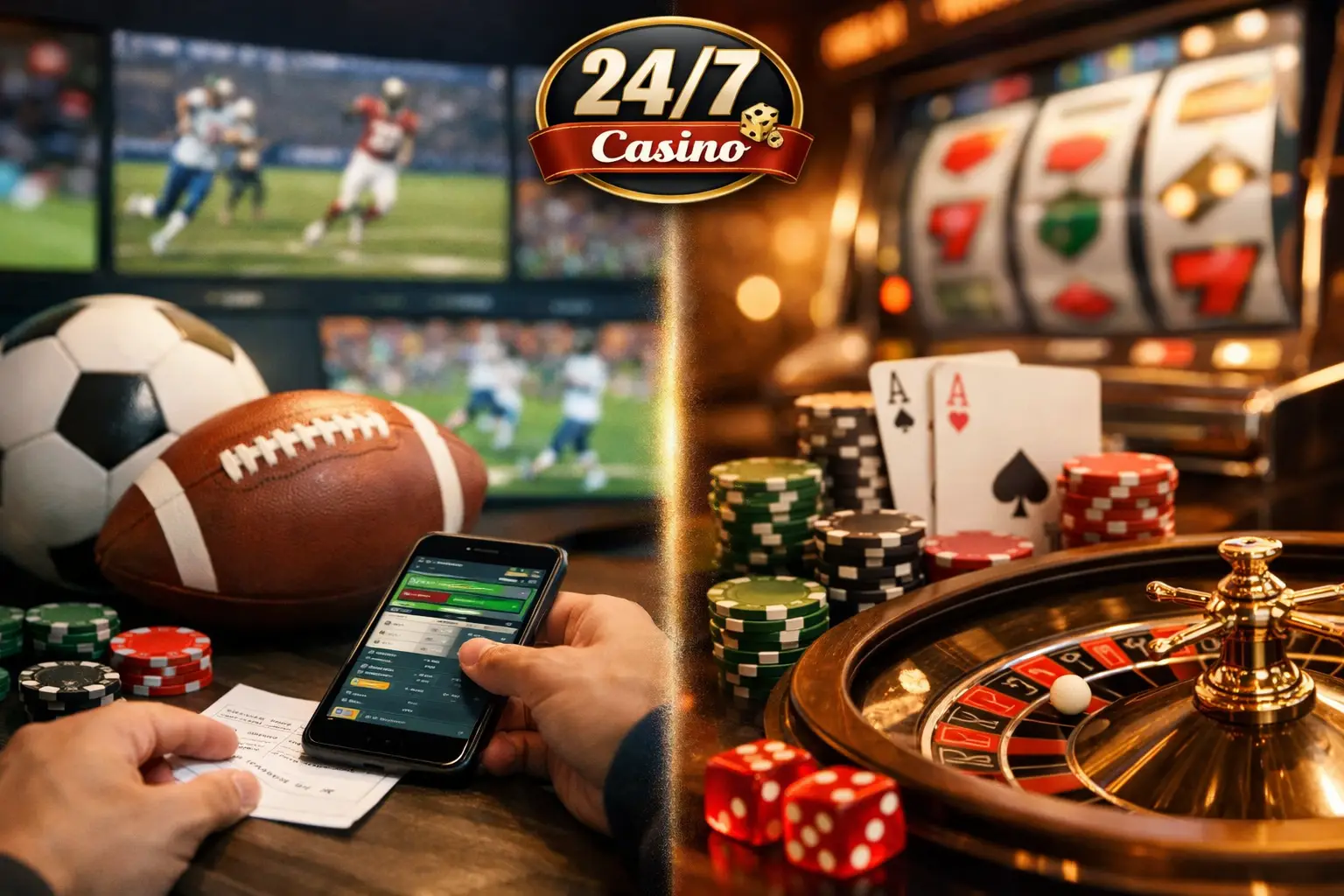
A last-minute goal can turn a live bet into a rush. A single roulette spin can do the same in seconds. That is the real appeal of sports betting vs casino play: both offer real-money entertainment, but they ask you to make very different choices before the action starts.
Sports betting puts the spotlight on an event you can follow, analyze, and react to. Casino play delivers instant access to slots, table games, live dealers, jackpots, and fast-paced rounds whenever you want them. Neither is automatically the better option. The right fit depends on whether you prefer research or randomness, longer events or rapid rounds, and a structured bankroll or a fixed session budget.
Sports Betting vs Casino Play: The Core Difference
Sports betting is event-driven. You choose a market, set your stake, and wait for the game, match, race, or contest to unfold. Your wager may be based on team form, player availability, matchups, venue, scheduling, or live momentum. Even a simple moneyline bet gives you a reason to follow every meaningful moment.
Casino games are product-driven. You select a game and start playing immediately. A slot session may involve hundreds of spins, while blackjack, roulette, baccarat, poker, crash games, and live dealer tables each create their own pace and decision points. The result is determined by the game rules, random number generation, cards, wheel outcomes, or the specific format being played.
The distinction matters because the entertainment cycle is different. A sports bet can stay open for 90 minutes, several hours, or even days. A casino round may be over in a few seconds. Sports betting tends to create anticipation around a scheduled event. Casino play is built for instant action, whether you have five minutes on mobile or want to settle into a live casino table.
What You Are Actually Betting On
With sports betting, the price is displayed as odds. Those odds reflect the market's view of probability, plus the sportsbook margin. A bettor might back a favorite to win, take an underdog at a bigger price, choose a point spread, or bet totals such as over or under. More advanced markets can include player props, period betting, accumulators, and live bets that move with the game.
Casino play works through game mathematics rather than betting markets. Slots show a theoretical return to player, commonly called RTP, alongside a volatility profile that affects how wins may arrive. Table games have house edges shaped by the rules and the decisions you make. Blackjack strategy can influence expected returns, while roulette is largely about selecting a stake pattern and accepting the built-in edge of the wheel.
That does not mean sports betting is predictable or casino games are all the same. Sports outcomes can change through one injury, penalty, weather shift, or unexpected performance. Casino RTP is a long-term theoretical measure, not a promise for one session. A high-volatility slot may go quiet for extended stretches before a larger feature lands. Every real-money choice carries uncertainty.
Pace, Control, and the Player Experience
If you enjoy studying information before placing a wager, sports betting may feel more engaging. You can compare lines, decide when to bet, and choose whether a market offers enough value for your bankroll. Live sports betting adds another layer, letting you respond to the flow of a game as odds update.
The trade-off is that there is often more waiting. A pre-match wager does not produce an instant result, and watching every game can make it tempting to add bets simply for action. The strongest approach is to decide your stake and reasoning before the event begins, then avoid chasing a changing scoreboard.
Casino games offer more direct control over pace. You can choose spin speed, bet size, game type, and when to stop. Slots are ideal for players who want a broad range of themes, bonus rounds, and jackpot potential. Live casino games bring real dealers, visible cards and wheels, and a social table atmosphere without leaving home.
The trade-off here is speed. Faster rounds mean a bankroll can move faster, particularly when stakes are increased after losses. Setting a session limit matters as much as choosing the game. Premium entertainment is best when the budget is already settled before the first bet is placed.
Bonuses Work Differently Across Both Options
Casino promotions often focus on deposit bonuses, free spins, cashback, or game-specific offers. These can extend play time or add extra value, but the terms matter. Check wagering requirements, eligible games, maximum bet limits, expiration dates, and any withdrawal conditions before opting in. Free spins may be a natural match for slot fans, while a table-game player should confirm whether their preferred games contribute to bonus wagering.
Sports offers may include a first-bet promotion, bet credits, odds boosts, profit boosts, or rewards tied to specific events. They can be useful when they match wagers you would already consider placing. A boosted price is not automatically a smart bet if the market itself does not suit your approach.
In both categories, a bonus should support the experience, not dictate it. Chasing promotions across games or fixtures can blur a clear budget. Read the conditions, choose offers that fit your usual play, and skip anything that encourages stakes beyond your comfort zone.
Bankroll Strategy: Different Rules for Different Games
Sports bettors usually benefit from a consistent staking plan. Many use a small unit size, such as 1% to 2% of a dedicated betting bankroll, then keep most bets within that range. This makes a losing run easier to absorb and prevents one confident opinion from dominating the entire balance.
For casino sessions, a fixed entertainment budget is often more practical. Decide how much you are willing to spend for the session, choose stakes that give you enough rounds to enjoy the game, and set a clear finish point. If a slot has a higher volatility level, lower stakes can help accommodate its larger swings. If you prefer blackjack or roulette, choose table limits that fit the same budget rather than stretching for higher stakes.
Never treat either form of gaming as a way to solve a financial problem. A win is never guaranteed, and previous outcomes do not create a debt the next wager must repay. Deposit limits, time reminders, cooling-off tools, and self-exclusion options are there for a reason. Use them early if play stops feeling like entertainment.
Which Option Fits Your Style?
Sports betting may be the better match if you enjoy following leagues, assessing information, and staying invested in a live event. It can make a regular-season game, tennis match, or major tournament more exciting, especially when you keep bets selective and stakes controlled.
Casino play may fit better if you want immediate variety and no event schedule. Slots, progressive jackpots, live blackjack, roulette, baccarat, poker, and game shows give you a wide choice of experiences from one account. At 24/7 Casino, that flexibility can suit players who want to switch from a live match to live dealer action or a jackpot slot without waiting for the next kickoff.
Many players enjoy both, but it helps to keep the budgets separate. A sports bankroll is for events you have chosen to bet. A casino budget is for the session and game types you want to enjoy. Separating them makes it easier to see what you are spending and protects the fun of each experience.
Your best next play is the one that fits your time, budget, and appetite for action. Choose the format you genuinely enjoy, know the rules before wagering, and let a pre-set limit decide when the session is done.