
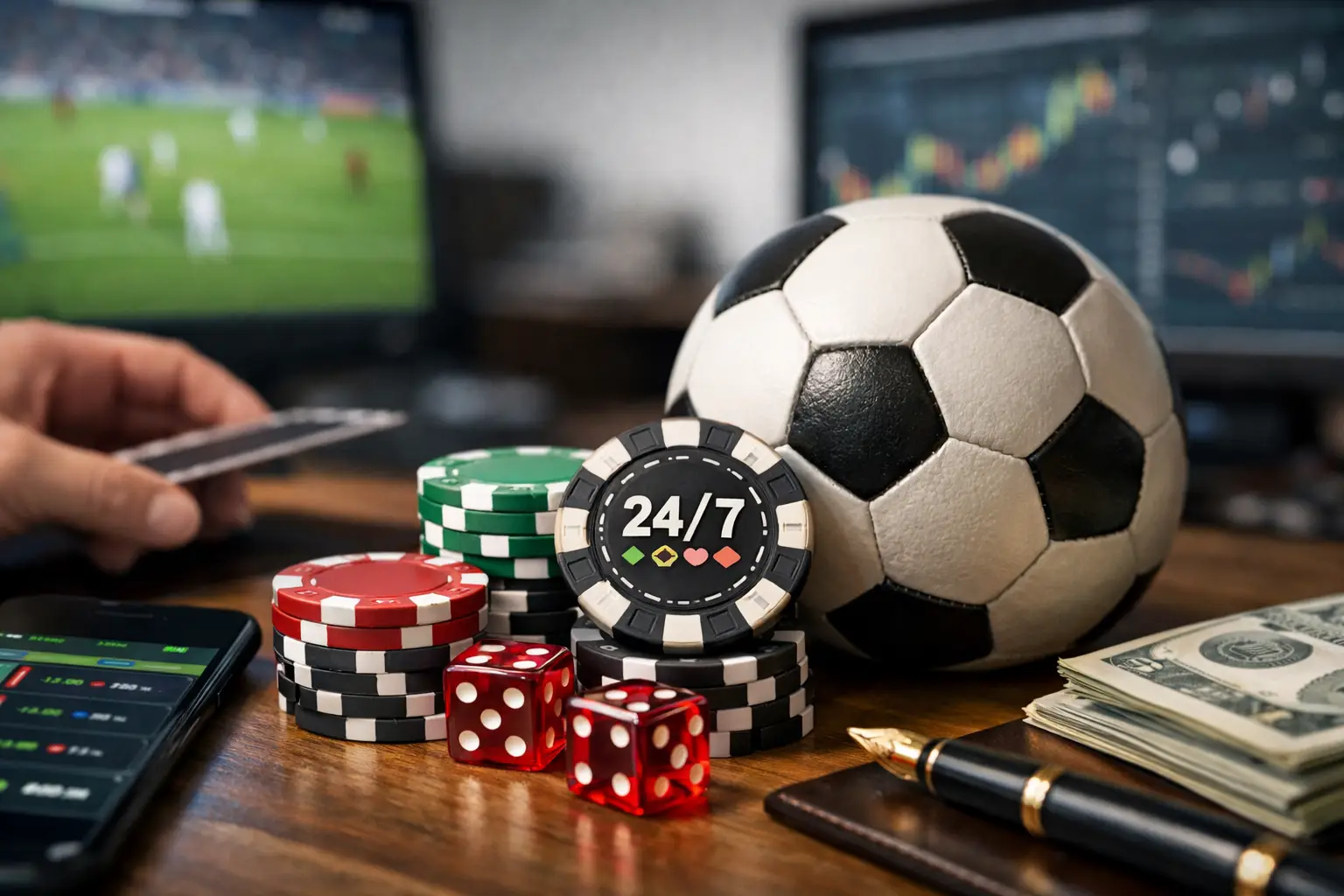
A single late goal can turn a quiet match into a huge moment, but the excitement is not a betting strategy. If you are searching comment miser sur le sport, start with the part that separates informed players from impulsive ones: understanding exactly what the odds say, what you can afford to risk, and why a bet is worth taking.
Sports betting is premium entertainment when it stays controlled. The objective is not to predict every winner or chase a dramatic payout. It is to make clear decisions, choose markets you understand, and enjoy the action without letting one result dictate the next move.
Comment miser sur le sport begins with the odds
Odds do more than show a possible return. They represent the sportsbook's view of probability, with a margin built in. Before backing a favorite, ask a simple question: does its real chance of winning look better than the chance implied by the price?
In decimal odds, the calculation is straightforward. Divide 1 by the odds, then multiply by 100. Odds of 2.00 imply a 50% chance. Odds of 1.50 imply roughly 66.7%. If a team priced at 1.50 has key injuries, a packed schedule, or a poor matchup, that short price may offer less value than it first appears.
A higher payout is not automatically a better bet. Long shots can be entertaining, especially in knockout tournaments or high-scoring leagues, but they lose more often by definition. Short-priced favorites also carry risk. The strongest choice is the one whose price makes sense after you have considered the match, not the one with the biggest potential win.
Know the market before you place the bet
A moneyline bet is simple: pick the winner. In soccer, a 1X2 market adds the draw as a separate outcome. Point spreads and handicaps level the playing field, while totals ask whether the combined score will land over or under a set number.
Each market demands a different type of analysis. A winner market may depend on overall team quality. A total often depends more on pace, tactical style, weather, lineups, and recent scoring patterns. Player props can be appealing, but they require close attention to minutes, role, opponent, and rotation risk.
Do not bet every market available just because the lobby is open 24/7. Pick a sport and bet type you can follow with confidence. A bettor who understands NBA rotation patterns or tennis court surfaces has a stronger foundation than someone placing random picks across five leagues.
Build a bankroll before building a bet slip
Your bankroll is the amount set aside exclusively for sports entertainment. It should never include rent, bills, savings, or money you need for daily life. Decide the total before the season, weekend, or event begins, then treat it as a fixed entertainment budget.
A practical approach is to use units. One unit can equal 1% or 2% of your bankroll, depending on how cautious you want to be. With a $200 bankroll, a 1% unit is $2. Most standard bets can stay between one and two units. The exact dollar amount matters less than keeping your stake sizing consistent.
Avoid increasing stakes because you feel certain, because a previous bet lost, or because a live match seems ready for a turnaround. Those are emotional signals, not analytical ones. A losing streak is possible even when your process is sound, and a winning streak does not prove that every next bet deserves a larger stake.
Set a session limit as well. When it is reached, stop. This keeps sports betting in the entertainment lane, where it belongs, and protects your ability to make measured decisions next time.
Research what can actually move a game
The best betting research is focused. Headlines and league tables provide context, but they rarely tell the full story. Look for information that directly changes a team's or player's chances.
For team sports, that can include injuries, suspensions, travel, rest days, squad rotation, tactical matchups, and motivation. A title contender playing three matches in seven days may not approach a domestic cup fixture with its strongest lineup. A road team crossing multiple time zones can face a meaningful performance drop. These details can matter more than a broad “form” narrative.
For individual sports, consider surface, fatigue, recent workload, head-to-head styles, and health. In tennis, a player with a powerful serve can look far more dangerous on a fast hard court than on clay. In combat sports, reach, grappling defense, and late replacement notice can influence the matchup more than a glossy win-loss record.
Be careful with small samples. A team winning its last three games may have faced weak opponents. A striker scoring in two straight matches may have taken penalties or benefited from unusual chances. Use recent form as a clue, not a verdict.
Compare your view to the price
Research only becomes useful when you compare it to the odds. Suppose you believe a team has a 55% chance to win, while the odds imply a 48% chance. That gap may be worth considering. If the odds imply 60%, your analysis may support the team but still not support the bet.
This is the discipline behind value betting. It does not mean every selected bet wins. It means you are looking for prices that appear favorable over many decisions, rather than seeking certainty from one game.
Use live betting with a plan, not a panic button
Live sports betting brings speed, momentum, and constantly changing odds. It can also create rushed decisions. A red card, a missed penalty, a quarterback injury, or an early foul problem can change a game quickly. The key is knowing whether the market has adjusted too far, too slowly, or appropriately.
Watch the event when possible. Live statistics can help, but possession alone does not reveal chance quality, and a scoreline does not always reflect control. A soccer team leading 1-0 after one shot may be under pressure. A basketball favorite down early may simply be shooting poorly while creating the looks it wants.
Before the game begins, identify a few scenarios that would interest you. Perhaps you will consider an under if the pace is clearly slow, or a live favorite only if its key player starts and looks healthy. This gives you a framework when the odds move. It is far better than opening the live lobby after a loss and trying to recover instantly.
Cash-out features can offer flexibility, but they are not automatically the smart choice. Sometimes locking in a return suits your risk tolerance. Other times, the offer includes a cost for that convenience. Decide based on your original reasoning and bankroll plan, not on nerves during the final minutes.
Treat parlays and bonuses as entertainment choices
Parlays combine several selections for a larger potential payout. They can make a game night more exciting, but every added leg makes the ticket harder to win. A five-leg parlay may look modest when each pick feels likely, yet the combined probability falls quickly.
If you enjoy parlays, keep the stake small and label them honestly as high-variance entertainment. Build the core of your betting around straightforward markets that you can evaluate on their own. The same rule applies to boosted odds, free bets, and promotional offers: read the conditions, understand qualifying requirements, and do not place bets you would otherwise avoid just to activate a promotion.
At 24/7 Casino, a clear approach to markets, offers, and account tools helps players focus on the game rather than confusion. That is the standard to expect from any platform you choose: transparent rules, secure payments, accessible support, and tools that support responsible play.
Keep records and stay honest about results
A betting record turns vague memories into useful information. Track the sport, market, odds, stake, result, and the reason for each pick. You do not need an elaborate spreadsheet. The purpose is to see patterns you might otherwise miss.
Maybe your player props perform poorly because you bet them without confirmed lineups. Maybe your live bets are strongest in one league but lose value when placed too late. Maybe parlays are taking a larger share of your bankroll than you realized. Records replace confidence and frustration with evidence.
Also track your behavior, not just your results. If betting feels stressful, starts affecting your budget, or pushes you to hide activity from people close to you, take a break and use available responsible gaming tools. Sports betting is for adults in jurisdictions where it is legal, and it should never become a way to solve financial problems.
The next time the odds light up before kickoff, give yourself an edge that has nothing to do with luck: pick one market you understand, set the stake before emotion arrives, and let the game remain what it should be - a great game to watch.